Lorem ipsum dolor sit amet

Lorem ipsum dolor sit amet, consectetur adipiscing elit, sed do eiusmod tempor incididunt ut labore et dolore magna aliqua. Adipiscing at in tellus integer feugiat scelerisque varius morbi enim. Eu turpis egestas pretium aenean pharetra magna ac. Feugiat vivamus at augue eget arcu dictum varius duis at. Senectus et netus et malesuada fames ac turpis. Odio facilisis mauris sit amet massa vitae tortor condimentum lacinia. Id semper risus in hendrerit gravida rutrum. Lacus laoreet non curabitur gravida arcu ac tortor dignissim. Tristique sollicitudin nibh sit amet commodo nulla. Mauris augue neque gravida in fermentum et sollicitudin.

Dignissim diam quis enim lobortis scelerisque. Phasellus vestibulum lorem sed risus ultricies tristique nulla. Euismod lacinia at quis risus. Mollis aliquam ut porttitor leo a diam sollicitudin. Morbi enim nunc faucibus a pellentesque sit amet porttitor eget. Purus in mollis nunc sed id semper risus in hendrerit. Etiam tempor orci eu lobortis. Augue interdum velit euismod in pellentesque massa placerat duis ultricies. Tortor id aliquet lectus proin nibh nisl condimentum id venenatis. Vitae tempus quam pellentesque nec nam aliquam sem et tortor. Mattis enim ut tellus elementum sagittis vitae et leo. Massa tempor nec feugiat nisl. Ullamcorper a lacus vestibulum sed. In nibh mauris cursus mattis molestie a iaculis. Lacus sed viverra tellus in hac. Sit amet venenatis urna cursus. Magna eget est lorem ipsum dolor sit amet consectetur adipiscing. Pellentesque habitant morbi tristique senectus et netus.

Consequat interdum varius sit amet mattis vulputate enim nulla aliquet. Urna nunc id cursus metus aliquam eleifend mi in nulla. Elit pellentesque habitant morbi tristique senectus. Ultrices eros in cursus turpis massa tincidunt dui ut. Montes nascetur ridiculus mus mauris vitae ultricies leo. Massa enim nec dui nunc mattis enim. Sed vulputate mi sit amet mauris commodo. Cursus eget nunc scelerisque viverra. Purus sit amet volutpat consequat mauris nunc. Urna nec tincidunt praesent semper feugiat nibh sed. Vehicula ipsum a arcu cursus vitae congue mauris. Dolor sit amet consectetur adipiscing elit pellentesque habitant morbi tristique.

Dolor sit amet consectetur adipiscing elit pellentesque habitant. Interdum varius sit amet mattis vulputate enim. Tempor orci eu lobortis elementum nibh tellus. Molestie nunc non blandit massa enim nec dui. Nulla malesuada pellentesque elit eget. Aliquet enim tortor at auctor urna nunc id cursus. Interdum consectetur libero id faucibus nisl tincidunt eget nullam non. Congue quisque egestas diam in arcu cursus euismod quis viverra. Pellentesque elit ullamcorper dignissim cras tincidunt lobortis feugiat vivamus. Quam viverra orci sagittis eu volutpat odio.

Malesuada nunc vel risus commodo viverra. Amet mattis vulputate enim nulla aliquet. Mauris pellentesque pulvinar pellentesque habitant morbi tristique. Tempus quam pellentesque nec nam aliquam sem. Aliquam id diam maecenas ultricies mi eget mauris pharetra et. Quis lectus nulla at volutpat diam ut. Suspendisse sed nisi lacus sed viverra tellus in. Integer eget aliquet nibh praesent tristique magna sit amet purus. Mi bibendum neque egestas congue quisque egestas diam in arcu. Lacus vestibulum sed arcu non odio euismod lacinia.

Accept
API: terms of use

By downloading content from the portal, the user undertakes to use it exclusively for non-commercial purposes and only for individual use, for professional and scientific purposes, while complying with all copyrights, other proprietary rights, and any stated limitation of rights.

Therefore, content from the portal may not be further copied, reproduced, or otherwise distributed without an express consent of the Ministry of Culture and Media.

Any use of the downloaded content must be accompanied by the note “Copyright (c) 2021, Ministry of Culture and Media of the Republic of Croatia, all rights reserved”.

Accept
Search portal

Fishing, maritime, and river navigation

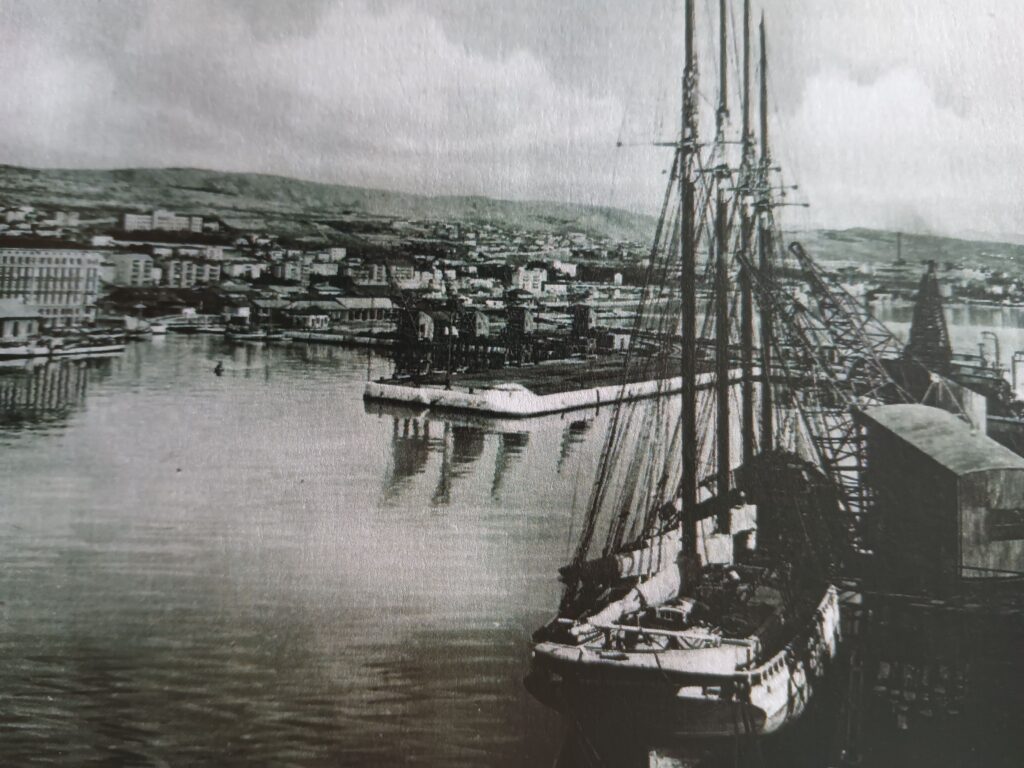
RIJEKA
Sailing boats on the Dead Canal
The oldest port in Rijeka was formed on a part of the old bed of river Rječina, colloquially called the Dead Canal. Around the time this photo was taken, Rijeka, after being connected with the rest of the Austro-Hungarian monarchy by rail in 1873, got a new modern port. Nevertheless, the Rječina riverbed remains a port for smaller ships and sailing ships. Wine and olive oil delivered from the Kvarner Islands and Dalmatia were unloaded there, the sails dried and the crew rested. In the hinterland of the old harbor you can see Sušak with the Trsat castle, which stands out for its rich cultural history.

Hubert Vaffier, 1892. (Mission scientifique et artistique – Autriche–Hongrie, Grece. 1892.)

Ministry of Culture and Media of the Republic of Croatia
Photo archive of the Conservation Department in Rijeka
RIJEKA
View of the city at the end of the first quarter of the 20th century with the port in the foreground

Vladimir Horvat, 1925.

Ministry of Culture and Media of the Republic of Croatia
Photo archive of the Conservation Department in Rijeka
Inv. No. 6171, neg. I-2390
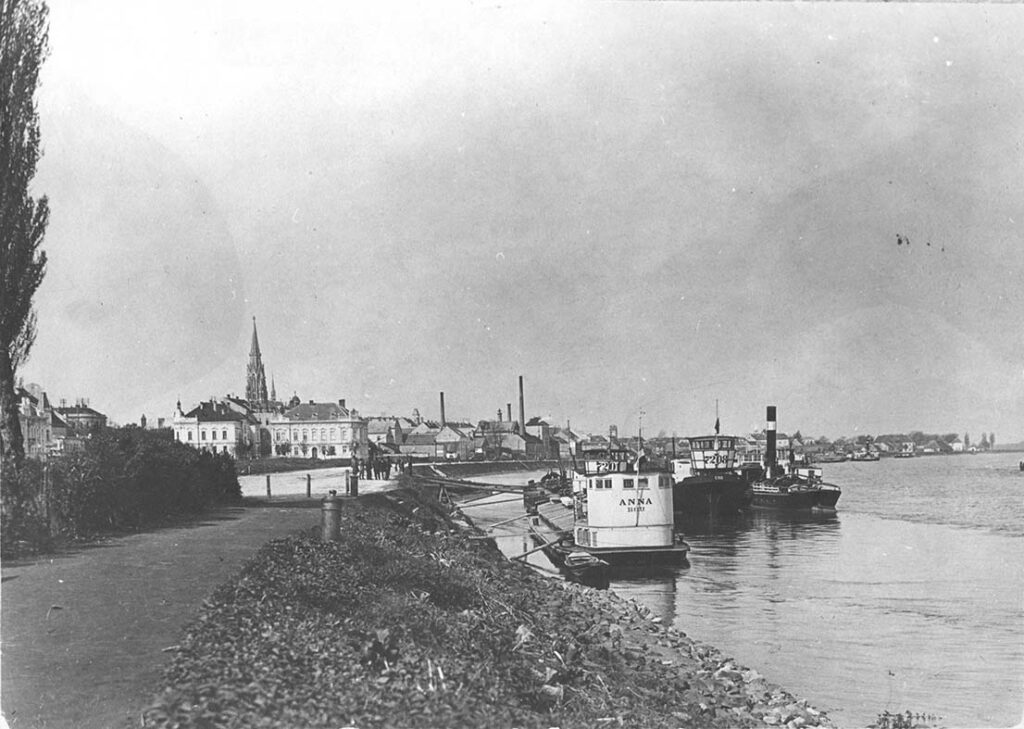
OSIJEK (administrative-economic center of Slavonia, eastern part of Croatia)
View of the city on the Drava
Captured from the promenade along the right bank of the Drava, where several ships are anchored tied to cleats, which are actually deeply buried former cannons of Osijek’s baroque fortress. The town is dominated by the high neo-Gothic tower of the parish church of St. Peter and Paul (the cathedral, built at the very end of the 19th century), and to the right of the cathedral complex you can see the chimneys of the Šeper family brewery, founded in 1856. At the time the photo was taken, the dominant view of Osijek’s coastal promenade, the Hotel Osijek, built in 1977 on the coast next to the Winter Harbor, was still missing.

Unidentified author, 50s of the 20th century

Ministry of Culture and Media of the Republic of Croatia
Photo archive of the Conservation Department in Osijek
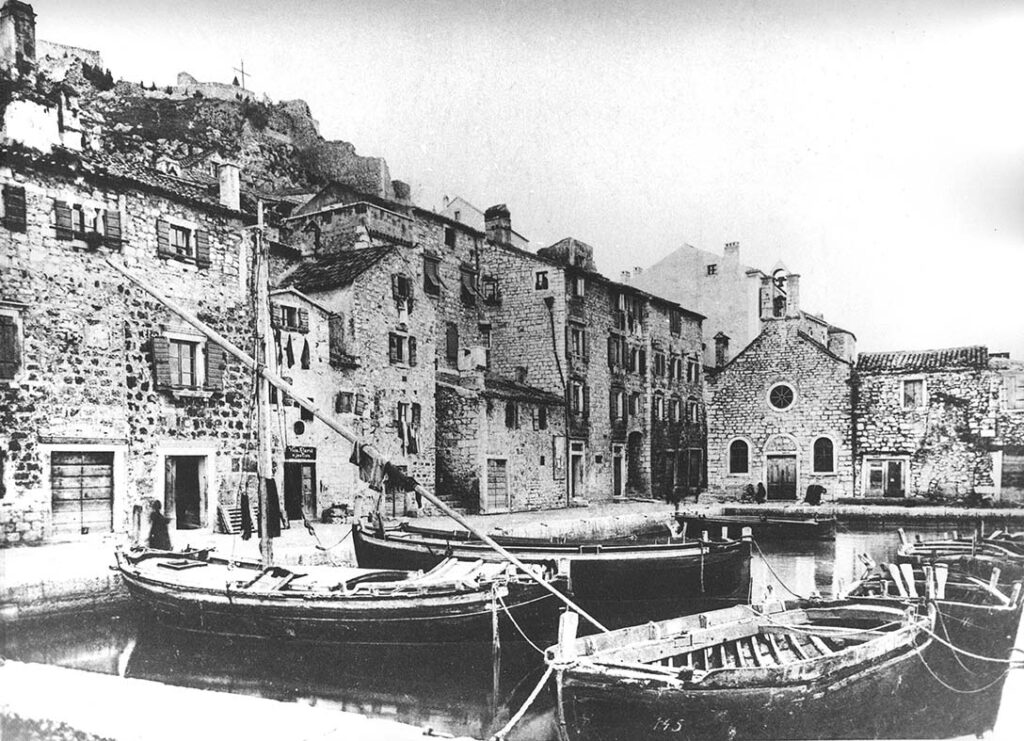
ŠIBENIK (Northern Dalmatia)
Dolac
The Dolac area, formed in the medieval period as a suburb of the city with stone houses and a small church of St. Cross around the harbour, mandrača, has been inhabited since ancient times by fishermen and heavy workers who spoke the Chakavian dialect of the Croatian language, which remained in use here until the 60s of the 20th century.


Unidentified author, probably late 19th century.

Ministry of Culture and Media of the Republic of Croatia
Photo archive of the Conservation Department in Split
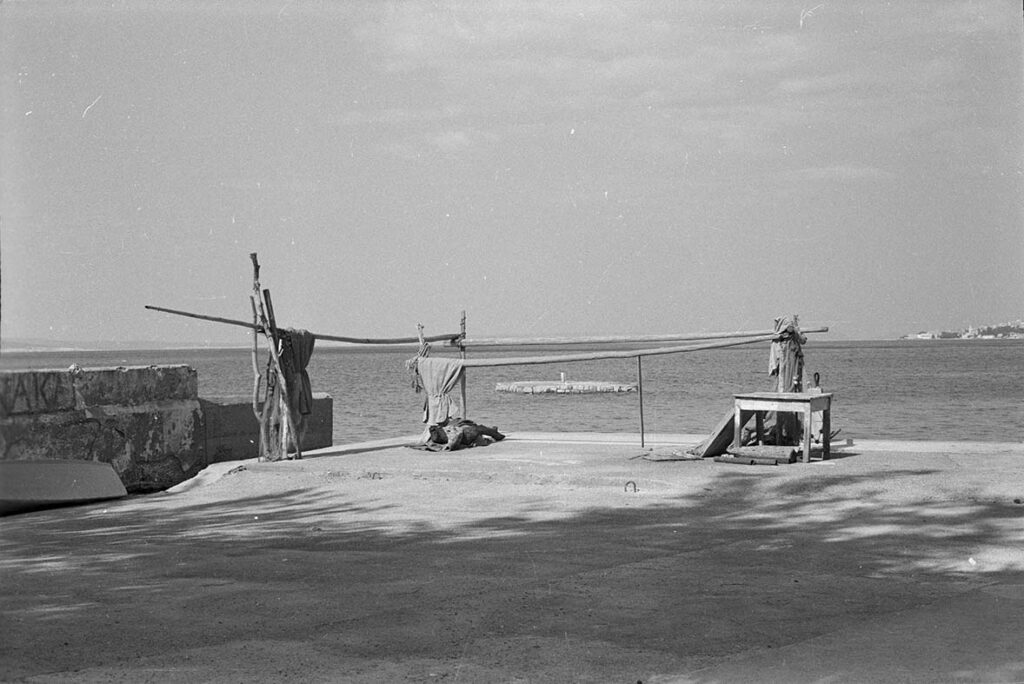
SELCE
(Crikvenica, The northern part of the Croatian coast)
Net dryers on a small jetty in harmony with the vastness of the sea

A. Mihatović, 1973.

Ministry of Culture and Media of the Republic of Croatia
Photo archive of the Conservation Department in Rijeka
Inv. No. 72127, neg. I-45547
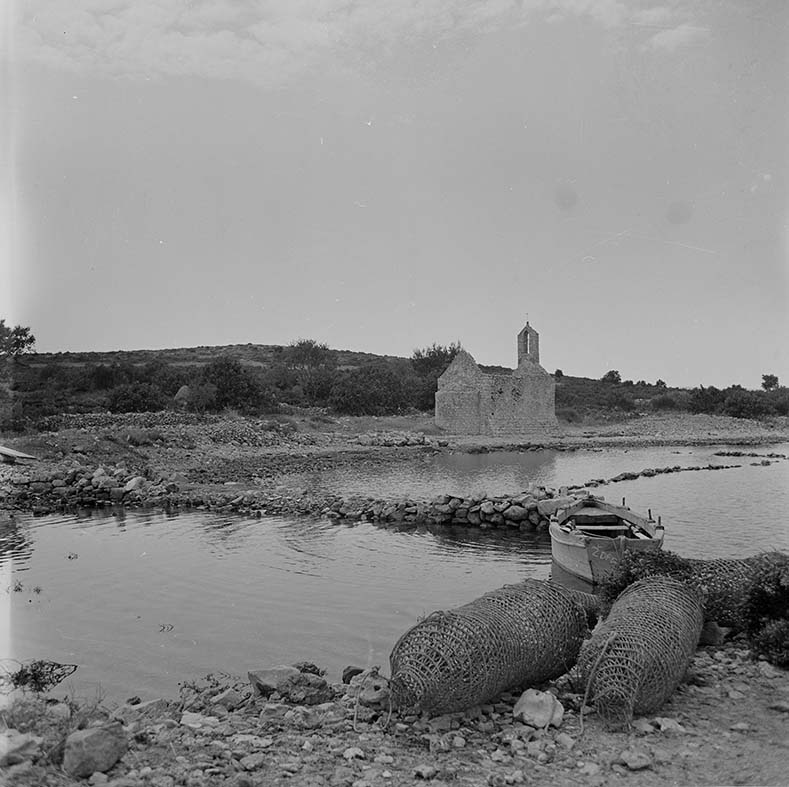
BABAC (islet in the area of the town of Biograd on the sea, about two kilometers from the island of Pašman)
The area with the ruined chapel of St. Andrew, the patron saint of fishermen and sailors, and the woven fisherman’s traps in the foreground.
On the islet, which is still unusually attractive to adventure tourists, there are the remains of the complex of the fortified Renaissance summer house of the de Soppe family (16th century), which, with its pronounced defensive role, represents an exceptional example of 16th century country architecture on the Zadar archipelago. Near the de Soppa complex is the chapel of St. Andrew, which, although it was built several centuries before the summer house, becomes an integral part of it, as evidenced by the family coat of arms built on its facade.

Ksenija Radulić, 1965.

Ministry of Culture and Media of the Republic of Croatia
Photo archive of the Conservation Department in Zadar
Inv. No. 6387, neg. 1891C
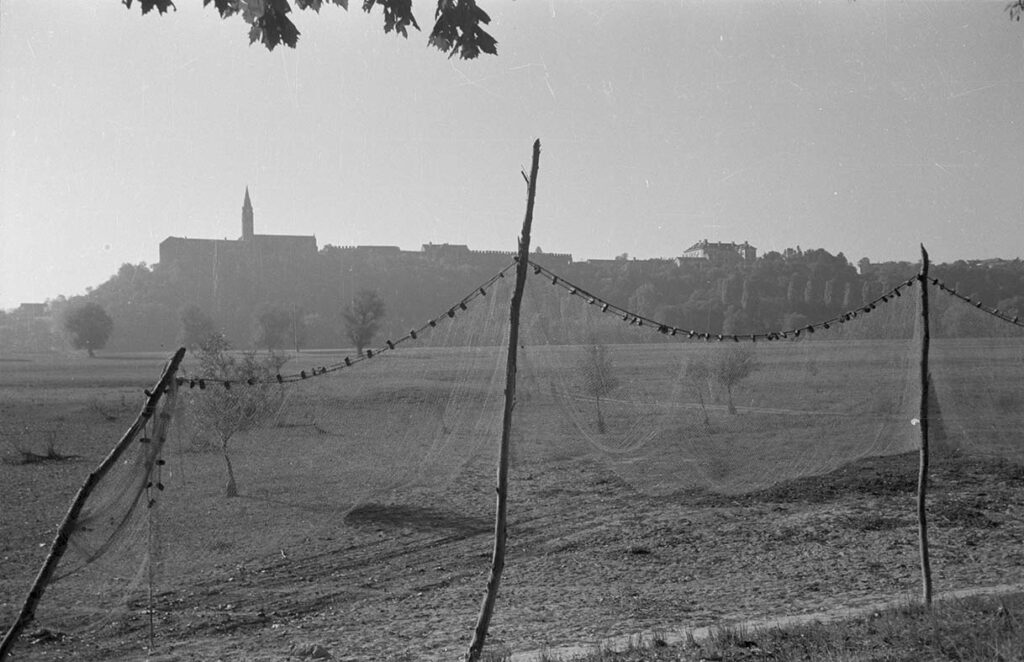
ILOK (the easternmost town in Croatia)
View of the town from the Danube
View from the Danube’s shore, where fishing nets are drying, toward the old part of the town with the Church of St. John of Capistrano (mid-14th century, restored at the beginning of the 20th century) and the Odescalchi Castle (built in the 18th century on the foundations of the old castle of Nikola of Ilok from the 15th century). Due to its layered history and picturesque setting, Ilok is often referred to as the “Little Dubrovnik” or the “Dubrovnik of the East.”

Nino Vranić, 1956.

Ministry of Culture and Media of the Republic of Croatia
Photo archive of cultural heritage

Inv. No. 20156, neg. I-C-161
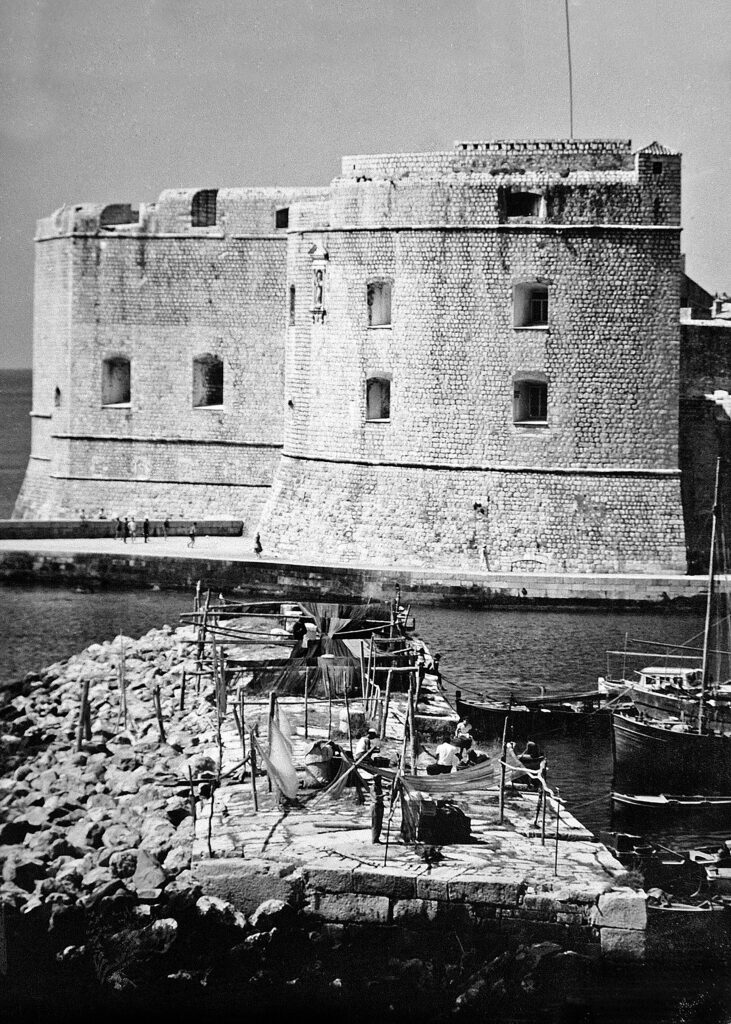
DUBROVNIK
Detail of the city port
In front of the fortress of St. Ivan or colloquially the Fortress “of the Wharf” (built in 1346) is the Kaše breakwater (built in 1487) as a temporary fishing habitat

Nino Vranić, 1958.

Ministry of Culture and Media of the Republic of Croatia
Photo archive of cultural heritage
Inv. No. 51707
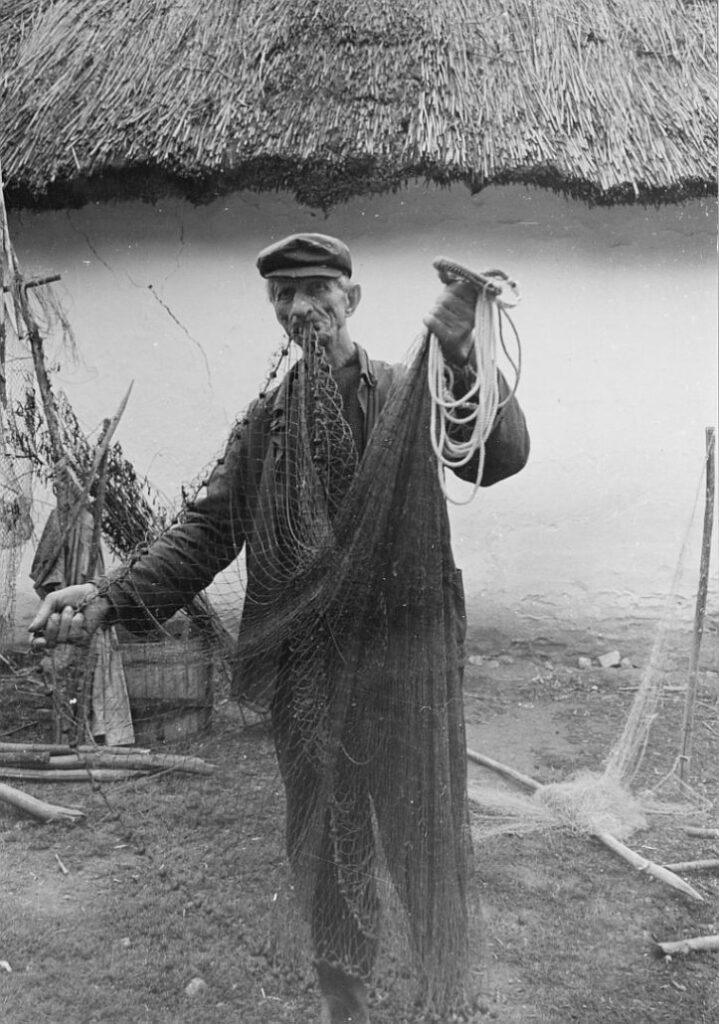
KOPAČEVO (Bilje, Baranja, eastern part of Croatia)
Alas, a fisherman from the Danube at his daily work

Nino Vranić, 1984.

Ministry of Culture and Media of the Republic of Croatia
Photo archive of cultural heritage
Inv. No. 20156, neg. II-14933
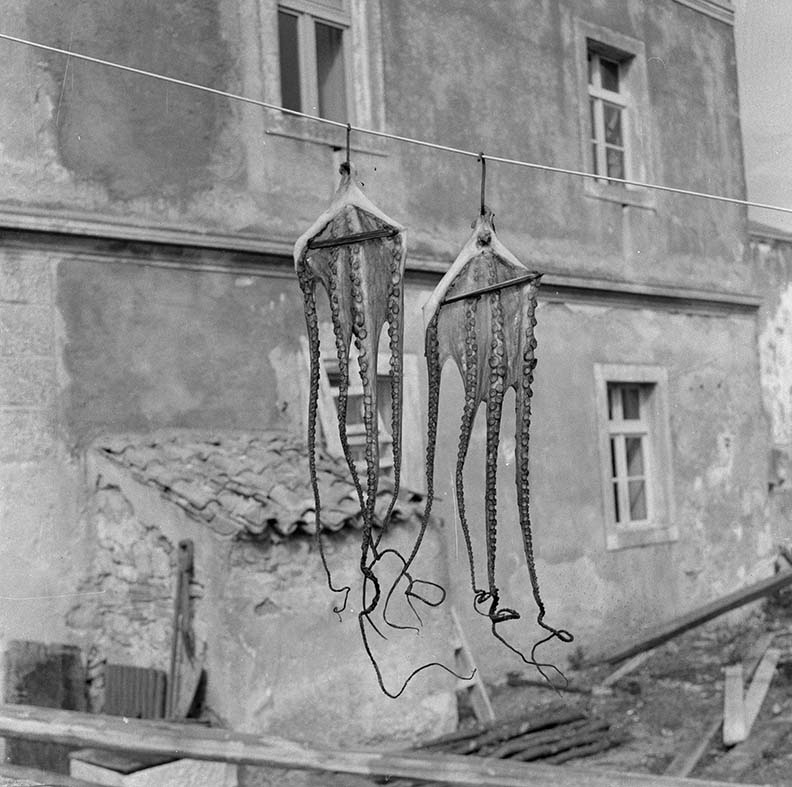
OLIB (Zadar archipelago)
Drying octopuses

Miljenko Domjan, 1975.

Ministry of Culture and Media of the Republic of Croatia
Photo archive of the Conservation Department in Zadar
Inv. No. 21231, neg. 6896A
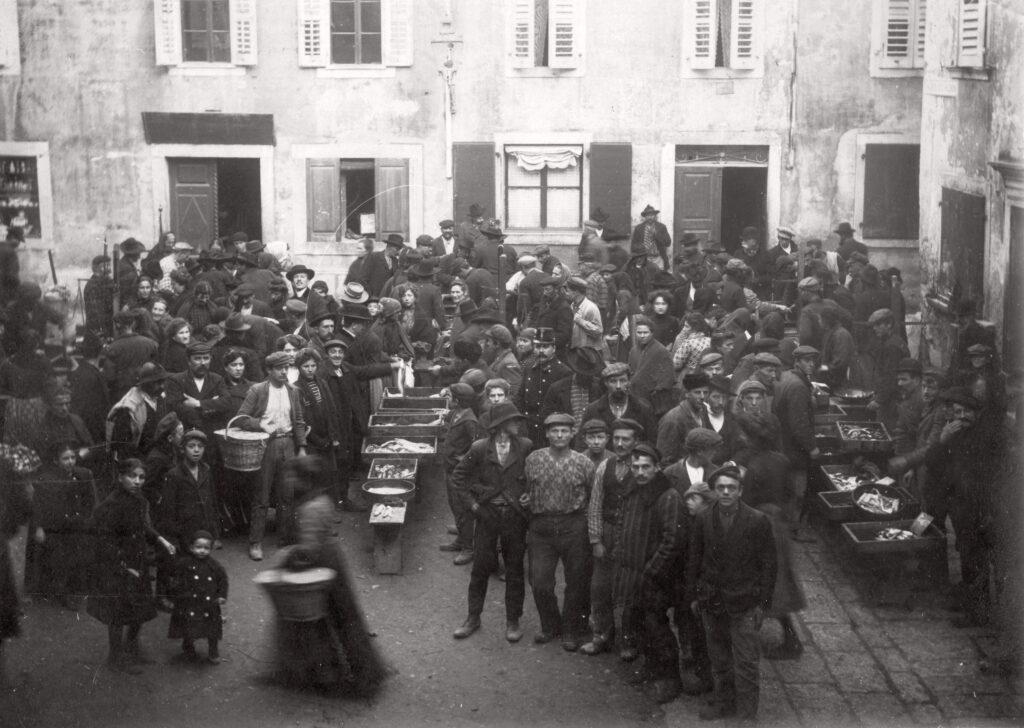
ISTRA (West coast, Poreč?)
Good catch and good demand. Like on Good Friday or Christmas Eve

Unidentified author, 20s or 30s of the 20th century

Ministry of Culture and Media of the Republic of Croatia
Photo archive of the Conservation Department in Rijeka